publications
publications by categories in reversed chronological order. generated by jekyll-scholar.
2025
- Drug-Discovery
 KITE-DDI: A Knowledge Graph Integrated Transformer Model for Accurately Predicting Drug-Drug Interaction Events From Drug SMILES and Biomedical Knowledge GraphAzwad Tamir and Jiann-Shiun YuanIEEE Access. Publication link , 2025
It is a common practice in modern medicine to prescribe multiple medications simultaneously to treat diseases. However, these medications could have adverse reactions between them, known as Drug-Drug Interactions (DDI), which have the potential to cause significant bodily injury and could even be fatal. Hence, it is essential to identify all the DDI events before prescribing multiple drugs to a patient. Most contemporary research for predicting DDI events relies on either information from Biomedical Knowledge graphs (KG) or drug SMILES, with very few managing to merge data from both to make predictions, while others use heuristic algorithms to extract features from SMILES and KGs, which are then fed into a Deep Learning framework to generate output. In this study, we propose a KG-integrated Transformer architecture to generate an end-to-end fully automated Machine Learning pipeline for predicting DDI events with high accuracy. The algorithm takes full-scale molecular SMILES sequences of a pair of drugs and a biomedical KG as input and predicts the interaction between the two drugs with high precision. The results show superior performance in two different benchmark datasets compared to existing state-of-the-art models especially when the test and training sets contain distinct sets of drug molecules. This demonstrates the strong generalization of the proposed model, indicating its potential for DDI event prediction for newly developed drugs. The model does not depend on heuristic models for generating embeddings and has a minimal number of hyperparameters, making it easy to use while demonstrating outstanding performance in low-data scenarios.
@article{KITE-DDI,
  author = {Tamir, Azwad and Yuan, Jiann-Shiun},
  journal = {IEEE Access},
  title = {KITE-DDI: A Knowledge Graph Integrated Transformer Model for Accurately Predicting Drug-Drug Interaction Events From Drug SMILES and Biomedical Knowledge Graph},
  year = {2025},
  volume = {13},
  number = {},
  pages = {40028-40043},
  keywords = {Drugs;Predictive models;Feature extraction;Compounds;Neural networks;Training;Accuracy;Prediction algorithms;Biological system modeling;Computer architecture;Artificial intelligence;attention;BERT;CNN;deep learning;drug discovery;drug-drug interaction;DRKG;fine-tuning;knowledge graph;machine learning;pretraining;self-attention;SMILE;transfer learning;transformers},
  doi = {10.1109/ACCESS.2025.3547594},
}
2024
- Protein-AI
 ProtGO: A Transformer based Fusion Model for accurately predicting Gene Ontology (GO) Terms from full scale Protein SequencesAzwad Tamir and Jiann-Shiun Yuan. Publication link , 2024
Recent developments in next-generation sequencing technology have led to the creation of extensive, open-source protein databases consisting of hundreds of millions of sequences. To render these sequences applicable in biomedical applications, they must be meticulously annotated by wet lab testing or extracting them from existing literature. Over the last few years, researchers have developed numerous automatic annotation systems, particularly deep learning models based on machine learning and artifcial intelligence, to address this issue. In this work, we propose a transformer-based fusion model capable of predicting Gene Ontology (GO) terms from full-scale protein sequences, achieving state-of-the-art accuracy compared to other contemporary machine learning annotation systems. The approach performs particularly well on clustered split datasets, which comprise training and testing samples originating from distinct distributions that are structurally diverse. This demonstrates that the model is able to understand both short and long term dependencies within the enzyme’s structure and can precisely identify the motifs associated with the various GO terms. Furthermore, the technique is lightweight and less computationally expensive compared to the benchmark methods, while at the same time not unaffected by sequence length, rendering it appropriate for diverse applications with varying sequence lengths.
@misc{ProtGO, title = {ProtGO: A Transformer based Fusion Model for accurately predicting Gene Ontology (GO) Terms from full scale Protein Sequences}, author = {Tamir, Azwad and Yuan, Jiann-Shiun}, year = {2024}, eprint = {2412.05776}, archiveprefix = {arXiv}, primaryclass = {cs.LG}, url = {https://arxiv.org/abs/2412.05776}, keywords = {Artifcial Intelligence;Attention;BERT;Deep Learning;fine-tuning;Fusion models;Gene Ontology(GO) terms;Machine Learning;ProtBert;Pretraining;Protein annotation;Protein sequences;Selective Transfer Learning;Transformers}, } - Dissertation
 Architectural and Training Regime Modifications to Transformer Models for low data ApplicationsAzwad TamirGraduate Thesis and Dissertation post-2024. Publication link , 2024
A signifcant catalyst of the recent Artifcial Intelligence and Machine Learning revolution is attributed to large language models (LLMs), which include many prominent AI systems such as ChatGPT, Bard, and Gemini. The majority of high-performance LLM models are based on the transformer architecture and the primary factor behind the recent enhancement in the performance of these models is attributed to the increase of layer quantity and dimensionality, resulting in an exponential rise in the total number of learnable parameters, necessitating substantial data for effective training. This may pose a signifcant barrier in certain application domains, such as bioinformatics, pharmaceutical research, and medicinal applications, where data is constrained by its sensitive nature, confdentiality restrictions, and personal privacy laws. The purpose of this study is to design architectural level and training loop modifcations to the transformer architecture to make it more suitable for low-data applications. Our proposed modifcations include selective transfer learning, cross transfer learning, hierarchical system design, convolutional transformers, knowledge graph fusion models, etc. To test the effcacy of the proposed techniques, we have applied the ideas to various applications, including Enzyme Commission (EC) number prediction from fullscale protein sequences. Here, we have linked four transformer ProtBert modules in a hierarchical manner and selectively pretrained them to obtain an accuracy increase from 89.93% to 97.88% and an F1 score boost from 0.9323 to 0.9787 compared to conventional transformer architectures. We have also designed a multimodal, knowledge graph integrated transformer model that could predict fetal drug-drug interaction events from drug SMILES and achieve accuracy increases of up to 6.78% on inductive test settings. Lastly, we have developed a parallel transformer modular architecture for predicting Gene Ontology (GO) terms from full-scale protein sequences and obtain better results with less training data and computational resources compared to other conventional transformer models
@article{Dissertation,
  author = {Tamir, Azwad},
  journal = {Graduate Thesis and Dissertation post-2024},
  title = {Architectural and Training Regime Modifications to Transformer Models for low data Applications},
  year = {2024},
  volume = {},
  number = {73},
  pages = {},
  keywords = {Machine Learning;Artificial Intelligence;Transformers;Drug-Drug Interaction;Proteomics;Bioinformatics},
}
2023
- Protein-AI
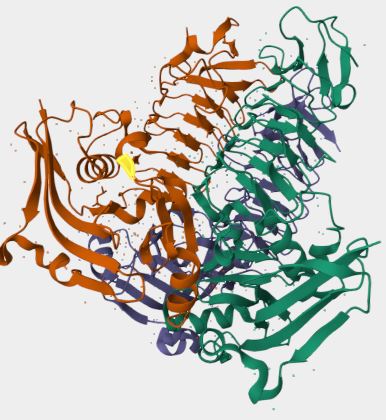 ProtEC: A Transformer Based Deep Learning System for Accurate Annotation of Enzyme Commission NumbersAzwad Tamir, Milad Salem, and Jiann-Shiun YuanIEEE/ACM Transactions on Computational Biology and Bioinformatics. Publication link , 2023
The advancements in next-generation sequencing technologies have given rise to large-scale, open-source protein databases consisting of hundreds of millions of sequences. However, to make these sequences useful in biomedical applications, they need to be painstakingly annotated by curating them from literature. To counteract this problem, many automated annotation algorithms have been developed over the years including deep learning models, especially in recent times. In this work, we propose a transformer-based deep-learning model that can predict the Enzyme Commission numbers of an enzyme from full-scale sequences with state-of-the-art accuracy compared to other recent machine learning annotation algorithms. The system does especially well on clustered split dataset which consists of training and testing samples derived from different distributions that are structurally dissimilar from each other. This proves that the model is able to understand deep patterns within the sequences and can accurately identify the motifs responsible for the different enzyme commission numbers. Moreover, the algorithm is able to retain similar accuracy even when the training size is significantly reduced, and also, the model accuracy is independent of the sequence length making it suitable for a wide range of applications consisting of varying sequence structures.
@article{ProtEC,
  author = {Tamir, Azwad and Salem, Milad and Yuan, Jiann-Shiun},
  journal = {IEEE/ACM Transactions on Computational Biology and Bioinformatics},
  title = {ProtEC: A Transformer Based Deep Learning System for Accurate Annotation of Enzyme Commission Numbers},
  year = {2023},
  volume = {20},
  number = {6},
  pages = {3691-3702},
  keywords = {Proteins;Computational modeling;Transformers;Databases;Annotations;Enzymes;Biological system modeling;Deep learning;enzyme commission numbers;machine learning;ProtBert;protein annotation;protein sequences;transformers},
  doi = {10.1109/TCBB.2023.3311427},
}
2021
- Electronics
 Multi-Tier 3D IC Physical Design with Analytical Quadratic Partitioning Algorithm Using 2D P&R ToolAzwad Tamir, Milad Salem, Jie Lin, and 2 more authorsElectronics. Publication link , 2021
In this study, we developed a complete flow for the design of monolithic 3D ICs. We have taken the register-transfer level netlist of a circuit as the input and synthesized it to construct the gate-level netlist. Next, we partitioned the circuit using custom-made partitioning algorithms and implemented the place and route flow of the entire 3D IC by repurposing 2D electronic design automation tools. We implemented two different partitioning algorithms, namely the min-cut and the analytical quadratic (AQ) algorithms, to assign the cells in different tiers. We applied our flow on three different benchmark circuits and compared the total power dissipation of the 3D designs with their 2D counterparts. We also compared our results with that of similar works and obtained significantly better performance. Our two-tier 3D flow with AQ partitioner obtained 37.69%, 35.06%, and 12.15% power reduction compared to its 2D counterparts on the advanced encryption standard, floating-point unit, and fast Fourier transform benchmark circuits, respectively. Finally, we analyzed the type of circuits that are more applicable for a 3D layout and the impact of increasing the number of tiers of the 3D design on total power dissipation.
@article{3D_IC_design, author = {Tamir, Azwad and Salem, Milad and Lin, Jie and Alasad, Qutaiba and Yuan, Jiann-shiun}, title = {Multi-Tier 3D IC Physical Design with Analytical Quadratic Partitioning Algorithm Using 2D P&R Tool}, journal = {Electronics}, volume = {10}, year = {2021}, number = {16}, article-number = {1930}, url = {https://www.mdpi.com/2079-9292/10/16/1930}, issn = {2079-9292}, doi = {10.3390/electronics10161930}, keywords = {3D integrated circuit;analytical quadratic;minimum cut;MIV;monolithic 3D IC;physical design;placement;tier partitioning}, } - ML-Forecasting
 Crime Prediction and Forecasting using Machine Learning AlgorithmsAzwad Tamir, Eric Watson, Brandon Willett, and 2 more authorsInternational Journal of Computer Science and Information Technology, Mar 2021
This research will focus on machine learning algorithms for crime forecasting. In the modern world, crime is becoming a major and complex problem. In this research, we discover the best course of action for teaching a model to forecast crime in major metropolitan cities. The purpose of this study is to provide the Police Department with proper crime forecasting so they can better delegate their resources in response to future crime hotspots. We applied several machine learning models to predict the severity of a reported crime based on whether the crime would lead to an arrest or not. We also did a deep dive into the city districts and studied the crime trends by year. We used Folium to do data visualization for the study of these trends. We discovered trends in the number of crimes and the arrest rate from year to year. The different machine learning models that we developed are the Random Forest, K-Nearest-Neighbours, AdaBoost, and Neural Network. We tested our models on the Chicago Police Department’s CLEAR (Citizen Law Enforcement Analysis and Reporting) system, which has more than 6,000,000 records. Among all four models, the Neural Network has the best outcome with an accuracy of 90.77%. This study also provides an insight into the applicability of different machine learning models in analyzing crime report datasets from large metropolitan cities.
@article{Crime_prediction,
  author = {Tamir, Azwad and Watson, Eric and Willett, Brandon and Hasan, Qutaiba and Yuan, Jiann-Shiun},
  year = {2021},
  month = mar,
  pages = {26-33},
  title = {Crime Prediction and Forecasting using Machine Learning Algorithms},
  volume = {12},
  number = {2},
  keywords = {AdaBoost;crime forecasting;deep neural network;folium;future crime;KNN;machine learning;prediction;random forest},
  journal = {International Journal of Computer Science and Information Technology},
}
2020
- Education
 Evaluating COs of Computer Programming Course for OBE-based BSc in EEE ProgramM. H. Bhuyan and A. TamirInternational Journal of Learning and Teaching. Publication link , Apr 2020
It is an important and challenging task to develop concepts and skills of undergraduate engineering students in computer programming course and hence their evaluation on higher order skills. Already several methods are developed to evaluate the students of this course for various engineering programs, but a method for undergraduate electrical and electronic engineering (EEE) program was not found in the literature. In this paper, a simple evaluation method for the students of computer programming course of undergraduate EEE (BSc in EEE) program has been reported using result-oriented learning. Detail methodology, course syllabus design, course outcomes (COs) and mapping it with program outcomes (POs) of BSc in EEE, question setting following Bloom’s taxonomy, laboratory experiment, assessment plan, course and PO evaluation data and graphs have been presented along with relevant statistics. All data are presented for a cohort of students who took this course in summer 2019 Semester at EEE Department of Southeast University. It has been observed that the target set by the course teacher has been achieved by the students. Recommendations of the course teacher for further improvement of the COs’ achievement have also been presented.
@article{Evaluating_COs,
  author = {Bhuyan, M. H. and Tamir, A.},
  title = {Evaluating COs of Computer Programming Course for OBE-based BSc in EEE Program},
  journal = {International Journal of Learning and Teaching},
  volume = {12},
  keywords = {CO evaluation;programming course;OBE},
  number = {2},
  pages = {86-99},
  year = {2020},
  month = apr,
  issn = {1986-4558},
  doi = {10.18844/ijlt.v12i2.4576},
}
2018
- Photonics
 Modelling of Performance Parameters of Single Photon Avalanche Detector Incorporating Dead Space Effects and History Dependent Ionization CoefficientAzwad Tamir and Mohammad S. SaifSoutheast University Journal of Science and Engineering (SEUJSE), Jun 2018
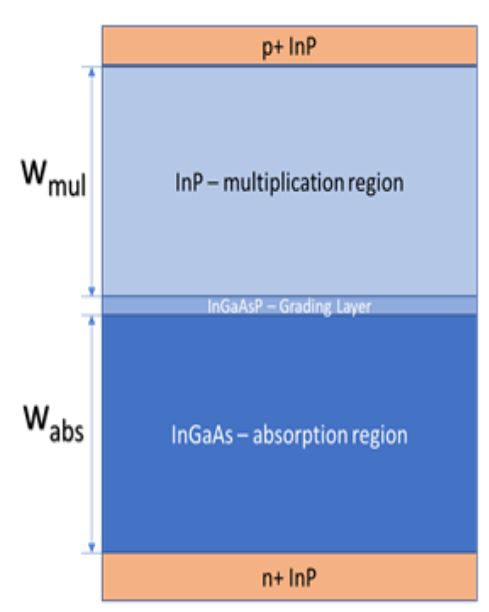
The modelling and simulation of the performance parameters of single-photon avalanche diode (SPAD) is carried out with the help of MATLAB. The model is applied on a sample SAM SPAD device which consists of a multiplication region made of InP and an absorber region of InGaAs. A generalized theory for breakdown probability is implemented which takes into account the generation of photocarriers at random locations among each layer. The study reveals that by increasing the multiplication region width, the number of dark carriers due to fieldassisted generation mechanisms is reduced which are counteracted by an increase in the number of GR dark carriers. Thus, the photon detection efficiency (PDE) and Dark count rate (DCR) is of utmost importance before the fabrication of a device. In this work we have simulated a SPAD device incorporating dead space effects and history dependent ionization coefficient to generate the electric field profile, dead space profile, ionization coefficient profile, break down profile and avalanche probabilities. Finally, we have extracted the PDE vs. over bias voltage and PDE vs DCR curves of the simulated device under different multiplication region widths to demonstrate the effect of multiplication region width on the performance parameters of a SPAD.
@article{SPAD,
  author = {Tamir, Azwad and Saif, Mohammad S.},
  title = {Modelling of Performance Parameters of Single Photon Avalanche Detector Incorporating Dead Space Effects and History Dependent Ionization Coefficient},
  journal = {Southeast University Journal of Science and Engineering (SEUJSE)},
  year = {2018},
  month = jun,
  volume = {12},
  number = {1},
  pages = {19-25},
  issn = {1999-1630},
  keywords = {Dark Count Rate(DCR);Dead Space Multiplication Theory;History dependent Ionization Coefficient;Photo Detection Efficiency (PDE);Single Photon Avalanche Detector (SPAD)},
}
2017
- Vision
 Detection of anemia from image of the anterior conjunctiva of the eye by image processing and thresholdingAzwad Tamir, Chowdhury S. Jahan, Mohammad S. Saif, and 5 more authorsIn 2017 IEEE Region 10 Humanitarian Technology Conference (R10-HTC). Publication link , Jun 2017
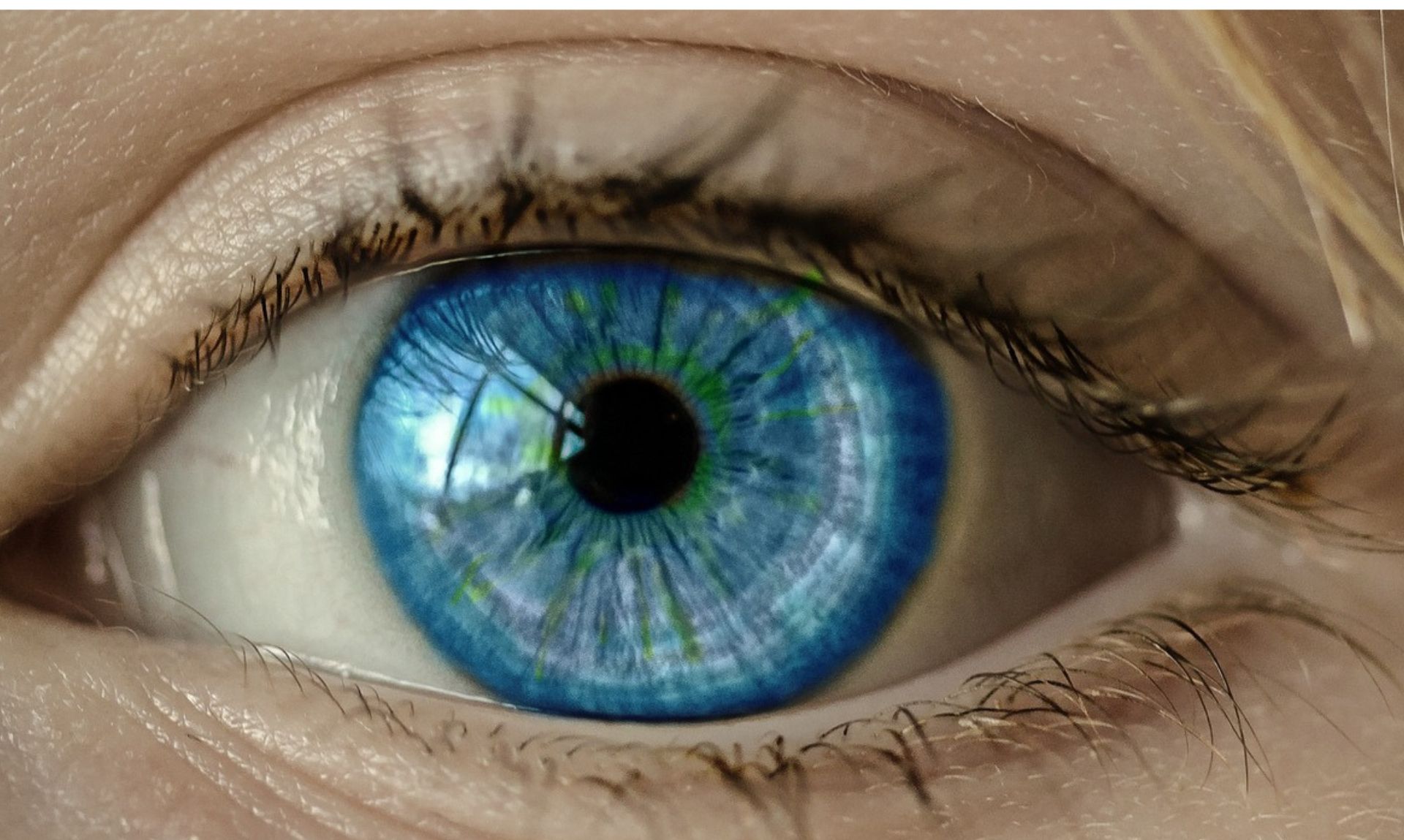
World Health Organization (WHO) identifies anemia, a health hazard condition marked by the deficiency of red blood cells or hemoglobin in the blood stream, as maligning a quarter of the total world population. An automated, quick and reliable detection of anemia is hence imperative. Preliminary detection of anemia is usually undertaken visually by the physician by examining the color of the anterior conjunctiva of the eye and confirmed with an invasive blood test. In this study, we designed a mechanism for the automated detection of anemia through non-invasive visual method. Our process involves the detection of anemia by analyzing the anterior conjunctival pallor of the eye. It operates by quantifying the conjunctival color from digital photographs of the eye taken with a smartphone camera of appropriate resolution under adequate lighting conditions with the help of an android application that we have devised. These images are then processed to obtain the red and green component spectra of the conjunctiva color and compared against a threshold to determine whether the patient is anemic or not. We employed our method on 19 test subjects with known hemoglobin levels. The results obtained from our process agreed with the patient’s blood report in 15 out of the 19 cases which translates to an accuracy of 78.9 percent. Our study was aimed towards the automation of healthcare facilities in underdeveloped parts of the world lacking proper healthcare facilities like hospitals and healthcare centers. Thus we developed a computerized, noninvasive, simple, cost effective, easy to use and portable primary screening test for anemia which can provide a viable alternative to invasive methods of anemia detection and have major humanitarian impact in the underdeveloped areas of the world.
@inproceedings{Anemia_paper, author = {Tamir, Azwad and Jahan, Chowdhury S. and Saif, Mohammad S. and Zaman, Sums U. and Islam, Md. Mazharul and Khan, Asir Intisar and Fattah, Shaikh Anowarul and Shahnaz, Celia}, booktitle = {2017 IEEE Region 10 Humanitarian Technology Conference (R10-HTC)}, title = {Detection of anemia from image of the anterior conjunctiva of the eye by image processing and thresholding}, year = {2017}, volume = {}, number = {}, pages = {697-701}, keywords = {Blood;Image color analysis;Cameras;Medical services;Lighting;Matlab;Anemia detection;image;photograph;filtering;thresholding;image processing;edge detection;eye;anterior conjunctiva;hemoglobin concentration;non-invasive method}, doi = {10.1109/R10-HTC.2017.8289053}, } - Biomed
 Brain-drive: A smart driver for controlling digital appliances using cognitive commandRakibul Islam Chowdhury, Arafat Kabir Sun, Azwad Tamir, and 2 more authorsIn 2017 IEEE Region 10 Humanitarian Technology Conference (R10-HTC). Publication link , Jun 2017
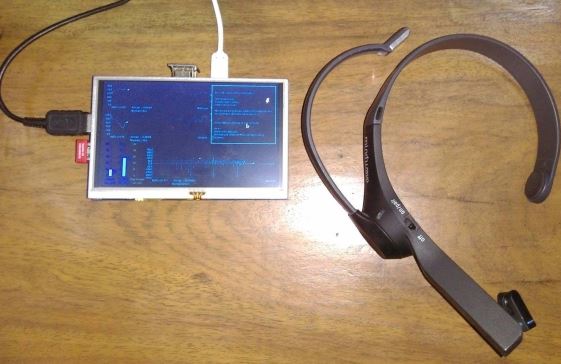
For the disabled and handicapped, the world of brain-computer interface has opened a new horizon to lead an unassisted and least supervised life. But the use of prosthetic limbs and artificial organs are still not commercially available in most of the countries. Recently developed some other brainwave based systems are mostly expensive, immobile or task specific. In order to overcome these problems, analogous to the pen-drive, we have focused on developing a low cost control unit namely “Brain-drive” which transforms ones thoughts into output digital electric signal. Certain thoughts (mental tasks) with hard eye blinking (neural driven physical outcome) develops certain action potential, no matter the eye blinking is visible or not, it creates a significant change in electroencephalogram (EEG) or brain signal. Single channel EEG signal is collected from frontal lobe as it plays a vital role in voluntary movement using a wearable Mindwave Mobile from Neurosky. The EEG data thus recorded is preprocessed to reduce the effect of noise and artifacts and then analyzed in time domain. A grid of cells are displayed on a monitor in front of the subject, which is connected to individual digital output pin onboard an embedded system. To select a cell, a user just needs to look and generate a sustainable eye blink which can easily be identified from the raw value of brainwave. Since eye blinking can be both conscious and involuntary, automatic periodic eye blink of very low frequency oscillation is removed to avoid unwanted selection of command. Unlike webcam based eye blink detector, Brain-Drive captures the signal for blink rather than the visual output of blinking. The system can be trained for person specific customized performance, considering special needs of a disabled or handicapped people who cannot communicate with the outside world using voice, motion or other methods. With the help of cognitive command, the ‘Brain-Drive’ can be used to control wheelchair, home appliances and even industrial machines.
@inproceedings{Brain-drive,
  author = {Chowdhury, Rakibul Islam and Sun, Arafat Kabir and Tamir, Azwad and Shahnaz, Celia and Fattah, Shaikh Anowarul},
  booktitle = {2017 IEEE Region 10 Humanitarian Technology Conference (R10-HTC)},
  title = {Brain-drive: A smart driver for controlling digital appliances using cognitive command},
  year = {2017},
  volume = {},
  number = {},
  pages = {851-855},
  keywords = {Electroencephalography;Control systems;Mobile communication;IEEE Regions;Conferences;Brain-computer interfaces;Headphones;Electroencephalogram(EEG);Brainwave;Brain Computer Interference(BCI)},
  doi = {10.1109/R10-HTC.2017.8289087},
}