ML-Forecasting
Crime Prediction and Forecasting using Machine Learning Algorithms
Paper Link
Crime Prediction and Forecasting using Machine Learning Algorithms
Paper ref: (Tamir et al., 2021)
Description:
In this project, several ML-based algorithms have been developed to forecast and predict future crimes in large metropolitan areas. The models have been tested out using past crime data from the city of Chicago. The results are promising and show the potential of implementing ML-based systems to predict and model crime rates in different areas.
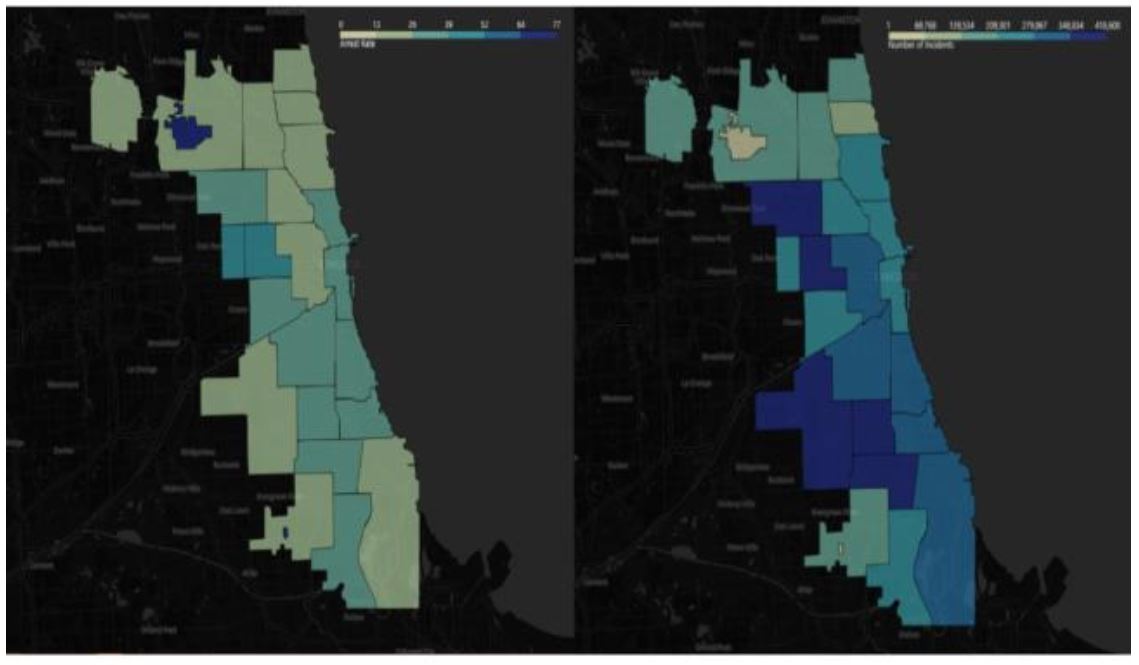
This research focuses on machine learning algorithms for crime forecasting. In the modern world, crime is becoming a major and complex problem. In this research, we discover the best course of action for teaching a model to forecast crime in major metropolitan cities. The purpose of this study is to provide the Police Department with proper crime forecasting so they can better delegate their resources in response to future crime hotspots. We applied several machine learning models to predict the severity of a reported crime based on whether the crime would lead to an arrest or not. We also did a deep dive into the city districts and studied the crime trends by year. We used Folium to do data visualization for the study of these trends.
We discovered trends in the number of crimes and the arrest rate from year to year. The different machine learning models that we developed are the Random Forest, K-Nearest-Neighbours, AdaBoost, and Neural Network. We tested our models on the Chicago Police Department’s CLEAR (Citizen Law Enforcement Analysis and Reporting) system, which has more than 6,000,000 records. Among all four models, the Neural Network has the best outcome with an accuracy of 90.77%. This study also provides an insight into the applicability of different machine learning models in analyzing crime report datasets from large metropolitan cities.
The neural network-based machine learning model performed the best among the different algorithms, achieving an impressive accuracy of 90.77%. It also showed better performance in terms of precision, recall, and F-1 scores compared to the other machine learning models. We also implemented several different neural network models with varying architectures and numbers of layers to determine the best structure for this kind of dataset. This work would help the police department of large metropolitan cities determine which police calls need immediate attention and manage their resources accordingly. It would also help them plan which areas of the city would require more police involvement in the future.